BlockingQueue 阻塞队列:线程同步与并发协作的核心组件
BlockingQueue(阻塞队列)是 Java 并发包(JUC)中用于线程间安全通信的核心组件,其核心特性是当队列满时阻塞生产者线程,当队列空时阻塞消费者线程,完美适配生产者 - 消费者模型。本文将系统解析 BlockingQueue 接口及其主要实现类,深入探讨其设计原理、核心方法及适用场景。
BlockingQueue 接口核心定义
BlockingQueue 继承自 Queue 接口,新增了阻塞式插入 / 移除方法,确保线程安全的同时简化了并发协作。其核心方法可分为三类:非阻塞方法、阻塞方法和超时方法。
核心方法分类
| 操作类型 |
非阻塞方法(满 / 空时抛异常) |
非阻塞方法(满 / 空时返回特殊值) |
阻塞方法(满 / 空时阻塞) |
超时方法(满 / 空时等待超时) |
| 插入 |
add(E e) |
offer(E e) |
put(E e) |
offer(E e, long timeout, TimeUnit unit) |
| 移除 |
remove() |
poll() |
take() |
poll(long timeout, TimeUnit unit) |
| 查看 |
element() |
peek() |
- |
- |
关键特性:
- 不允许插入
null 元素(会抛出 NullPointerException);
- 支持线程中断(阻塞方法声明了
throws InterruptedException);
- 提供批量操作(如
drainTo(Collection) 一次性取出所有元素)。
主要实现类详解
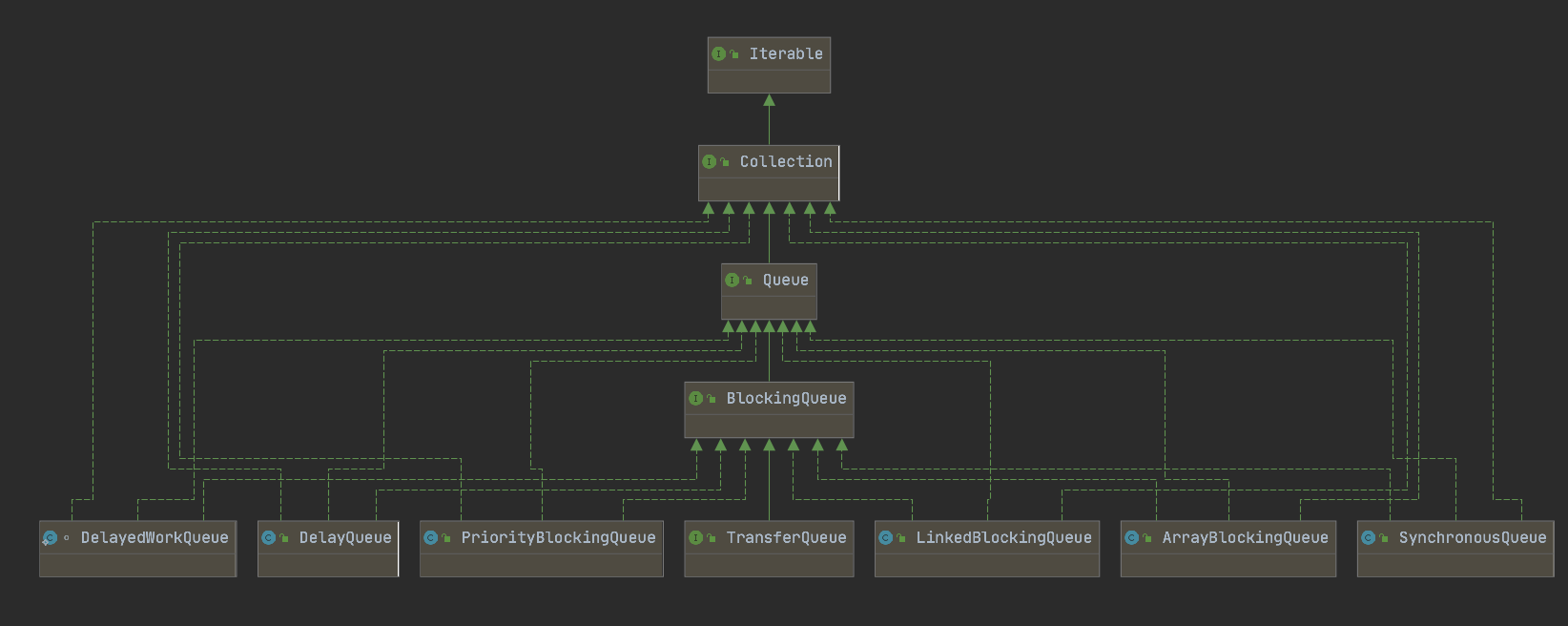
![阻塞队列]()
BlockingQueue 有多个实现类,适用于不同场景。以下是最常用的 5 种实现:
ArrayBlockingQueue:基于数组的有界阻塞队列
核心特性
- 底层结构:数组(容量固定,创建时需指定);
- 排序方式:FIFO(先进先出);
- 并发控制:单把全局锁(
ReentrantLock)+ 两个条件变量(notEmpty/notFull);
- 公平性:支持公平锁(按线程等待顺序访问)和非公平锁(默认)。
源码解析
1
2
3
4
5
6
7
8
9
10
11
12
13
14
15
16
17
18
19
20
21
22
23
24
25
26
27
28
29
30
31
32
33
| public class ArrayBlockingQueue<E> extends AbstractQueue<E>
implements BlockingQueue<E>, java.io.Serializable {
final Object[] items;
int takeIndex;
int putIndex;
int count;
final ReentrantLock lock;
private final Condition notEmpty;
private final Condition notFull;
public ArrayBlockingQueue(int capacity, boolean fair) {
if (capacity <= 0) throw new IllegalArgumentException();
this.items = new Object[capacity];
this.lock = new ReentrantLock(fair);
this.notEmpty = lock.newCondition();
this.notFull = lock.newCondition();
}
}
|
put 方法(阻塞插入):
1
2
3
4
5
6
7
8
9
10
11
12
13
14
15
16
17
18
19
20
21
| public void put(E e) throws InterruptedException {
checkNotNull(e);
final ReentrantLock lock = this.lock;
lock.lockInterruptibly();
try {
while (count == items.length)
notFull.await();
enqueue(e);
} finally {
lock.unlock();
}
}
private void enqueue(E x) {
final Object[] items = this.items;
items[putIndex] = x;
if (++putIndex == items.length) putIndex = 0;
count++;
notEmpty.signal();
}
|
take 方法(阻塞移除):
1
2
3
4
5
6
7
8
9
10
11
12
13
14
15
16
17
18
19
20
21
22
23
| public E take() throws InterruptedException {
final ReentrantLock lock = this.lock;
lock.lockInterruptibly();
try {
while (count == 0)
notEmpty.await();
return dequeue();
} finally {
lock.unlock();
}
}
private E dequeue() {
final Object[] items = this.items;
@SuppressWarnings("unchecked")
E x = (E) items[takeIndex];
items[takeIndex] = null;
if (++takeIndex == items.length) takeIndex = 0;
count--;
notFull.signal();
return x;
}
|
特点:
- 单锁设计导致入队和出队无法并行,高并发下性能可能受限;
- 适合对容量有严格限制的场景(如日志缓冲、资源池)。
LinkedBlockingQueue:基于链表的有界 / 无界阻塞队列
核心特性
- 底层结构:单向链表(默认容量为
Integer.MAX_VALUE,可视为无界);
- 排序方式:FIFO;
- 并发控制:两把独立锁(
putLock 控制入队,takeLock 控制出队),支持入队和出队并行;
- 适用场景:线程池(如
newFixedThreadPool 默认使用此队列)。
源码解析
1
2
3
4
5
6
7
8
9
10
11
12
13
14
15
16
17
18
19
20
21
22
23
24
25
26
27
28
29
30
31
32
33
34
| public class LinkedBlockingQueue<E> extends AbstractQueue<E>
implements BlockingQueue<E>, java.io.Serializable {
static class Node<E> {
E item;
Node<E> next;
Node(E x) { item = x; }
}
private final int capacity;
private final AtomicInteger count = new AtomicInteger();
transient Node<E> head;
private transient Node<E> last;
private final ReentrantLock putLock = new ReentrantLock();
private final Condition notFull = putLock.newCondition();
private final ReentrantLock takeLock = new ReentrantLock();
private final Condition notEmpty = takeLock.newCondition();
}
|
put 方法(阻塞插入):
1
2
3
4
5
6
7
8
9
10
11
12
13
14
15
16
17
18
19
20
21
| public void put(E e) throws InterruptedException {
if (e == null) throw new NullPointerException();
int c = -1;
Node<E> node = new Node<E>(e);
final ReentrantLock putLock = this.putLock;
final AtomicInteger count = this.count;
putLock.lockInterruptibly();
try {
while (count.get() == capacity)
notFull.await();
enqueue(node);
c = count.getAndIncrement();
if (c + 1 < capacity)
notFull.signal();
} finally {
putLock.unlock();
}
if (c == 0)
signalNotEmpty();
}
|
take 方法(阻塞移除):
1
2
3
4
5
6
7
8
9
10
11
12
13
14
15
16
17
18
19
20
21
| public E take() throws InterruptedException {
E x;
int c = -1;
final AtomicInteger count = this.count;
final ReentrantLock takeLock = this.takeLock;
takeLock.lockInterruptibly();
try {
while (count.get() == 0)
notEmpty.await();
x = dequeue();
c = count.getAndDecrement();
if (c > 1)
notEmpty.signal();
} finally {
takeLock.unlock();
}
if (c == capacity)
signalNotFull();
return x;
}
|
特点:
- 双锁设计支持入队和出队并行,高并发性能优于
ArrayBlockingQueue;
- 无界模式下需注意内存溢出风险(如无限制生产元素)。
PriorityBlockingQueue:支持优先级的无界阻塞队列
核心特性
- 底层结构:平衡二叉堆(数组实现);
- 排序方式:自然排序或自定义
Comparator(元素需实现 Comparable 或传入比较器);
- 并发控制:单锁(
ReentrantLock)+ 条件变量 notEmpty;
- 无界性:自动扩容(最大容量
Integer.MAX_VALUE - 8)。
适用场景
- 任务调度(按优先级执行任务);
- 延迟处理(结合时间优先级)。
核心方法
1
2
3
4
5
6
7
8
9
10
11
12
13
14
15
16
17
18
|
public void put(E e) {
offer(e);
}
public E take() throws InterruptedException {
final ReentrantLock lock = this.lock;
lock.lockInterruptibly();
try {
E result;
while ((result = dequeue()) == null)
notEmpty.await();
return result;
} finally {
lock.unlock();
}
}
|
DelayQueue:延迟阻塞队列
核心特性
- 元素要求:必须实现
Delayed 接口(重写 getDelay(TimeUnit) 方法);
- 触发条件:仅当元素的延迟时间 <= 0 时,才能被取出;
- 底层依赖:
PriorityQueue 维护元素优先级,ReentrantLock 保证线程安全;
- 适用场景:缓存过期清理、定时任务调度(如
ScheduledThreadPoolExecutor)。
源码解析
1
2
3
4
5
6
7
8
9
10
11
12
13
14
15
16
17
18
19
20
21
22
23
24
25
26
27
28
29
30
31
32
33
34
35
36
37
38
39
40
41
42
43
| public class DelayQueue<E extends Delayed> extends AbstractQueue<E>
implements BlockingQueue<E> {
private final transient ReentrantLock lock = new ReentrantLock();
private final PriorityQueue<E> q = new PriorityQueue<E>();
private Thread leader = null;
private final Condition available = lock.newCondition();
public E take() throws InterruptedException {
final ReentrantLock lock = this.lock;
lock.lockInterruptibly();
try {
for (;;) {
E first = q.peek();
if (first == null)
available.await();
else {
long delay = first.getDelay(NANOSECONDS);
if (delay <= 0)
return q.poll();
first = null;
if (leader != null)
available.await();
else {
Thread thisThread = Thread.currentThread();
leader = thisThread;
try {
available.awaitNanos(delay);
} finally {
if (leader == thisThread)
leader = null;
}
}
}
}
} finally {
if (leader == null && q.peek() != null)
available.signal();
lock.unlock();
}
}
}
|
SynchronousQueue:无缓冲的同步队列
核心特性
- 无存储能力:元素直接从生产者传递给消费者,不存储任何元素;
- 阻塞机制:生产者插入元素后会阻塞,直到消费者取出;消费者取出元素前会阻塞,直到生产者插入;
- 适用场景:线程间直接通信(如
newCachedThreadPool 用此队列实现任务提交与执行的同步)。
示例代码
1
2
3
4
5
6
7
8
9
10
11
12
13
14
15
16
17
18
19
20
21
22
23
24
25
26
27
| public static void main(String[] args) throws InterruptedException {
BlockingQueue<String> queue = new SynchronousQueue<>();
new Thread(() -> {
try {
System.out.println("生产者发送:A");
queue.put("A");
System.out.println("生产者发送:B");
queue.put("B");
} catch (InterruptedException e) {
e.printStackTrace();
}
}).start();
new Thread(() -> {
try {
Thread.sleep(1000);
System.out.println("消费者接收:" + queue.take());
Thread.sleep(1000);
System.out.println("消费者接收:" + queue.take());
} catch (InterruptedException e) {
e.printStackTrace();
}
}).start();
}
|
输出:
1
2
3
4
5
6
| 生产者发送:A
(1秒后)
消费者接收:A
生产者发送:B
(1秒后)
消费者接收:B
|
阻塞队列的典型应用场景
生产者 - 消费者模型
通过阻塞队列实现生产者和消费者的解耦与并发协作:
- 生产者线程通过
put 插入数据;
- 消费者线程通过
take 取出数据;
- 队列自动平衡生产和消费速度(满时阻塞生产者,空时阻塞消费者)。
线程池任务队列
线程池(如 ThreadPoolExecutor)使用阻塞队列存储待执行任务:
newFixedThreadPool 使用 LinkedBlockingQueue(无界,任务可无限堆积);newCachedThreadPool 使用 SynchronousQueue(任务直接提交给线程,无缓冲);newScheduledThreadPool 使用延迟队列实现定时任务。
异步日志框架
如 Logback 的异步日志器,使用 ArrayBlockingQueue 缓存日志事件:
- 应用线程快速写入队列(非阻塞);
- 后台线程从队列取出并输出日志(阻塞等待新事件)。
各实现类对比与选择建议
| 实现类 |
底层结构 |
容量特性 |
并发性能 |
适用场景 |
| ArrayBlockingQueue |
数组 |
有界 |
中 |
固定容量场景(如资源池) |
| LinkedBlockingQueue |
链表 |
可配置 |
高 |
线程池、高并发通信 |
| PriorityBlockingQueue |
二叉堆 |
无界 |
中 |
优先级任务调度 |
| DelayQueue |
优先级队列 |
无界 |
中 |
延迟任务(缓存清理、定时任务) |
| SynchronousQueue |
无存储 |
无界(逻辑) |
极高 |
线程间直接通信 |