Web上下文初始化
Spring MVC Web 上下文初始化机制详解:从 web.xml 到注解配置
Web 上下文(WebApplicationContext)是 Spring MVC 在 Web 环境中的核心容器,负责管理 Bean 的生命周期并与 Servlet 容器集成。其初始化过程与 ServletContext 紧密绑定,生命周期完全一致。从 “传统 web.xml 配置→ContextLoaderListener 工作原理→Servlet 3.0 注解配置” 三个维度,彻底解析 Spring MVC Web 上下文的初始化机制。
Web 上下文与 ServletContext 的关系
在 Web 应用中,ServletContext 是 Servlet 容器(如 Tomcat)提供的全局上下文对象,代表整个 Web 应用,生命周期从应用启动到停止。而 Spring 的 WebApplicationContext 是 Spring 在 Web 环境中的 IOC 容器,依赖 ServletContext 存在,并通过 ServletContext 存储和获取,两者生命周期完全同步。
- 存储位置:
WebApplicationContext初始化后,会以固定键值(WebApplicationContext.ROOT_WEB_APPLICATION_CONTEXT_ATTRIBUTE,即org.springframework.web.context.WebApplicationContext.ROOT)存入ServletContext的属性中,方便后续获取。 - 核心作用:
WebApplicationContext管理 Web 相关的 Bean(如 Controller、Service、Repository 等),并整合 Spring 与 Servlet 容器的交互(如请求处理、会话管理等)。
传统配置:基于 web.xml 与 ContextLoaderListener
在 Servlet 3.0 之前,Web 上下文的初始化依赖 web.xml 配置,核心是通过 ContextLoaderListener 触发初始化流程。
1. web.xml 核心配置
<!-- 1. 配置 ContextLoaderListener:触发 Web 上下文初始化 -->
<listener>
    <listener-class>org.springframework.web.context.ContextLoaderListener</listener-class>
</listener>

<!-- 2. 配置上下文配置文件路径(可选,默认有默认值) -->
<context-param>
    <param-name>contextConfigLocation</param-name>
    <!-- 多个配置文件用逗号分隔,支持 classpath: 或 /WEB-INF/ 前缀 -->
    <param-value>classpath:applicationContext.xml</param-value>
</context-param>ContextLoaderListener:实现ServletContextListener接口,监听ServletContext的初始化和销毁事件,是 Web 上下文的 “启动器”。contextConfigLocation:指定 Spring 配置文件的位置,若不配置则使用默认路径(/WEB-INF/applicationContext.xml)。
ContextLoaderListener 工作原理
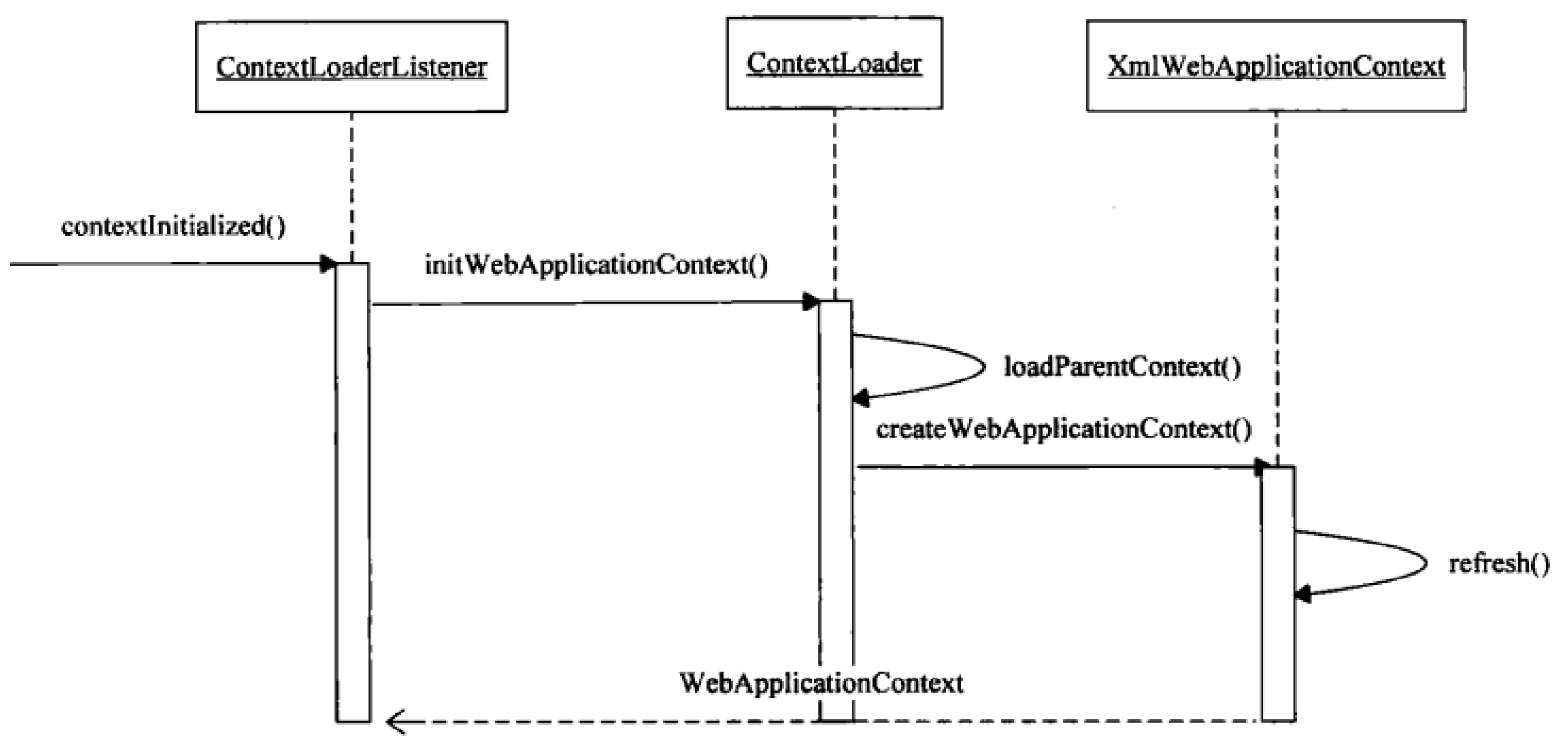
ContextLoaderListener 继承 ContextLoader 类,通过重写 ServletContextListener 的回调方法,将 Web 上下文的初始化与 ServletContext 生命周期绑定。
核心源码解析
public class ContextLoaderListener extends ContextLoader implements ServletContextListener {
// 当 ServletContext 初始化时触发(Web 应用启动时)
public void contextInitialized(ServletContextEvent event) {
// 核心:初始化 WebApplicationContext 并与 ServletContext 绑定
initWebApplicationContext(event.getServletContext());
}
// 当 ServletContext 销毁时触发(Web 应用关闭时)
public void contextDestroyed(ServletContextEvent event) {
// 关闭 WebApplicationContext 并清理资源
closeWebApplicationContext(event.getServletContext());
ContextCleanupListener.cleanupAttributes(event.getServletContext());
}
}initWebApplicationContext:初始化核心流程
initWebApplicationContext 是 Web 上下文初始化的核心方法,流程如下:
检查是否已存在根上下文
避免重复初始化:若ServletContext中已存在WebApplicationContext.ROOT_WEB_APPLICATION_CONTEXT_ATTRIBUTE键的属性,则抛出异常。创建 WebApplicationContext 实例
通过createWebApplicationContext(servletContext)方法创建上下文实例:- 若
web.xml中通过contextClass配置了自定义上下文类(如<context-param name="contextClass" value="com.example.MyWebContext"/>),则使用该类; - 否则使用默认实现类
XmlWebApplicationContext(定义在ContextLoader.properties中:org.springframework.web.context.WebApplicationContext=org.springframework.web.context.support.XmlWebApplicationContext)。
- 若
配置并刷新上下文
对创建的ConfigurableWebApplicationContext进行配置:- 设置父容器(若有,通常用于多上下文分层);
- 加载配置文件(通过
contextConfigLocation指定的路径); - 调用
refresh()方法完成 Bean 的加载、实例化和依赖注入(IOC 容器核心流程)。
绑定上下文到 ServletContext
将初始化完成的WebApplicationContext存入ServletContext:servletContext.setAttribute( WebApplicationContext.ROOT_WEB_APPLICATION_CONTEXT_ATTRIBUTE, this.context );后续可通过
WebApplicationContextUtils.getWebApplicationContext(servletContext)随时获取上下文。
3. 默认配置路径与上下文分层
- 默认配置路径:若未指定
contextConfigLocation,XmlWebApplicationContext会默认加载/WEB-INF/applicationContext.xml(定义在ContextLoader的常量DEFAULT_CONFIG_LOCATION中)。 - 上下文分层:
ContextLoaderListener创建的是根上下文(Root WebApplicationContext),通常管理 Service、Repository 等 “业务层” Bean;而DispatcherServlet会创建子上下文(WebApplicationContext),管理 Controller、HandlerMapping 等 “Web 层” Bean。子上下文可访问父上下文的 Bean,但父上下文不能访问子上下文的 Bean(实现关注点分离)。
简化配置:Spring 3.x+ 无需 ContextLoaderListener
从 Spring 3.x 开始,若无需上下文分层(即不需要单独的根容器),可仅配置 DispatcherServlet,此时 DispatcherServlet 会创建一个单一的 WebApplicationContext,同时承担根容器和子容器的角色,仅加载 MVC 相关配置文件。
示例(web.xml 简化配置):
<!-- 仅配置 DispatcherServlet,无需 ContextLoaderListener -->
<servlet>
    <servlet-name>springmvc</servlet-name>
    <servlet-class>org.springframework.web.servlet.DispatcherServlet</servlet-class>
    <init-param>
        <param-name>contextConfigLocation</param-name>
        <param-value>classpath:springmvc.xml</param-value> <!-- 仅加载 MVC 配置 -->
    </init-param>
    <load-on-startup>1</load-on-startup>
</servlet>
<servlet-mapping>
    <servlet-name>springmvc</servlet-name>
    <url-pattern>/</url-pattern>
</servlet-mapping>
这种方式适用于简单应用,避免了上下文分层的复杂性;但复杂应用仍建议保留分层(通过 ContextLoaderListener 创建根容器),实现业务逻辑与 Web 逻辑的解耦。
现代配置:Servlet 3.0+ 无 web.xml 方式
Servlet 3.0 规范(JSR 315)引入了 “无 XML 配置” 支持,通过 Java 代码和注解替代 web.xml。Spring 基于此提供了 WebApplicationInitializer 接口,实现类可在 Servlet 容器启动时自动注册组件(如 DispatcherServlet、ContextLoaderListener)。
1. SPI 机制:SpringServletContainerInitializer
Servlet 3.0 允许通过 SPI(Service Provider Interface) 机制自动发现并加载 ServletContainerInitializer 实现类。Spring 在 spring-web 包中通过 SPI 注册了 SpringServletContainerInitializer:
- SPI 配置文件:
META-INF/services/javax.servlet.ServletContainerInitializer,内容为org.springframework.web.SpringServletContainerInitializer。 - 触发时机:Servlet 容器(如 Tomcat)启动时,会扫描并实例化所有
ServletContainerInitializer实现类,调用其onStartup方法。
SpringServletContainerInitializer 通过 @HandlesTypes 注解指定需要处理的接口(WebApplicationInitializer):
public class SpringServletContainerInitializer implements ServletContainerInitializer {
public void onStartup(Set<Class<?>> webAppInitializerClasses, ServletContext servletContext) throws ServletException {
// 收集所有 WebApplicationInitializer 实现类
List<WebApplicationInitializer> initializers = new LinkedList<>();
// ... 省略实例化逻辑 ...
// 调用所有实现类的 onStartup 方法
for (WebApplicationInitializer initializer : initializers) {
initializer.onStartup(servletContext);
}
}
}即:Servlet 容器启动时,SpringServletContainerInitializer 会自动查找并执行所有 WebApplicationInitializer 实现类的 onStartup 方法,完成 Spring MVC 的初始化。
2. 抽象实现:AbstractAnnotationConfigDispatcherServletInitializer
Spring 提供 AbstractAnnotationConfigDispatcherServletInitializer 作为 WebApplicationInitializer 的抽象实现类,简化了无 XML 配置的开发。只需继承该类并实现 3 个抽象方法,即可替代 web.xml 中的所有配置。
public class MyWebAppInitializer extends AbstractAnnotationConfigDispatcherServletInitializer {
/**
* 1. 根容器配置类(对应 ContextLoaderListener 加载的配置)
* return null 表示无需根容器(仅使用一个容器)
*/
protected Class<?>[] getRootConfigClasses() {
// 例如:返回 Spring 业务层配置类(Service、Repository 等)
return new Class[]{RootConfig.class};
}
/**
* 2. Web 容器配置类(对应 DispatcherServlet 加载的配置)
*/
protected Class<?>[] getServletConfigClasses() {
// 返回 Spring MVC 配置类(Controller、ViewResolver 等)
return new Class[]{WebConfig.class};
}
/**
* 3. DispatcherServlet 的映射路径(同 web.xml 中的 <url-pattern>)
*/
protected String[] getServletMappings() {
// 拦截所有请求(除了 JSP)
return new String[]{"/"};
}
}配置类示例:
RootConfig.class(根容器配置,业务层):
public class RootConfig { // 配置数据源、事务管理器等业务层组件 }WebConfig.class(Web 容器配置,MVC 层):
// 启用 Spring MVC 注解驱动 // 扫描 Controller public class WebConfig implements WebMvcConfigurer { // 配置视图解析器、静态资源处理等 MVC 组件 public ViewResolver viewResolver() { InternalResourceViewResolver resolver = new InternalResourceViewResolver(); resolver.setPrefix("/WEB-INF/views/"); resolver.setSuffix(".jsp"); return resolver; } }
3. 自动注册的组件
AbstractAnnotationConfigDispatcherServletInitializer 会自动完成以下工作(替代 web.xml):
- 创建根容器(
Root WebApplicationContext):通过getRootConfigClasses()指定的配置类,对应ContextLoaderListener的功能; - 创建 Web 容器(
Servlet WebApplicationContext):通过getServletConfigClasses()指定的配置类,对应DispatcherServlet的上下文; - 注册
DispatcherServlet:映射路径由getServletMappings()指定,并设置为启动时加载(load-on-startup=1); - 注册
ContextLoaderListener:若getRootConfigClasses()返回非空配置类,则自动注册,用于初始化根容器。
两种配置方式对比与最佳实践
| 配置方式 | 适用场景 | 优势 | 劣势 |
|---|---|---|---|
| web.xml + ContextLoaderListener | 传统项目、需要兼容旧版本 Servlet 容器 | 配置直观,易于理解和调试 | 配置繁琐,XML 与代码分离,维护成本高 |
| 注解配置(AbstractAnnotationConfigDispatcherServletInitializer) | 现代项目、Servlet 3.0+ 容器 | 类型安全,配置与代码结合,简化维护 | 调试时需跟踪代码逻辑,对新手不友好 |
最佳实践
- 新项目:优先使用 Servlet 3.0+ 注解配置,通过
AbstractAnnotationConfigDispatcherServletInitializer实现,减少 XML 配置; - 上下文分层:复杂项目建议保留根容器(业务层)和 Web 容器(MVC 层)的分层,通过
getRootConfigClasses()和getServletConfigClasses()分别配置,实现关注点分离; - 简化配置:简单项目可返回
getRootConfigClasses() = null,仅使用 Web 容器,减少配置复杂度。
总结
Spring MVC Web 上下文的初始化是 Spring 与 Servlet 容器集成的核心环节,其本质是通过 ContextLoaderListener 或注解配置,创建 WebApplicationContext 并与 ServletContext 绑定,管理 Web 环境中的 Bean 生命周期。
- 传统方式:通过
web.xml配置ContextLoaderListener和contextConfigLocation,显式指定初始化参数; - 现代方式:基于 Servlet 3.0+ 的 SPI 机制,通过
WebApplicationInitializer实现类(如AbstractAnnotationConfigDispatcherServletInitializer),用代码替代 XML 配置,更灵活且类型安全